Cruciferous vegetables
Broccoli, cauliflower, kale, brussels sprouts, cabbage, arugula
Contain indole-3-carbinol and DIM, which help shuttle estrogen down the protective 2-hydroxy detox pathway.
Chapter 14 · Section IV — Daily Practices
Food is the most consistent conversation we have with our cells. Three times a day, we either nourish or inflame.
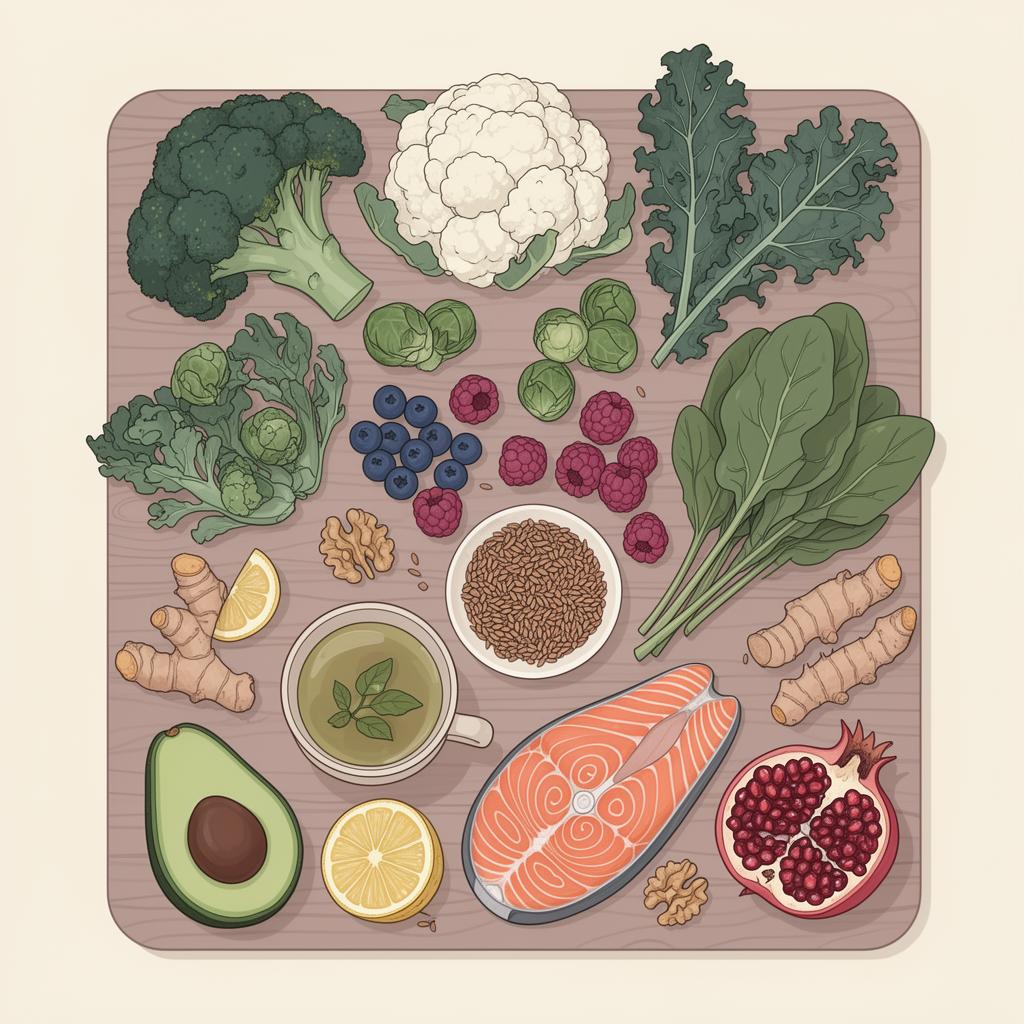
There is no single food that prevents breast cancer, and no single food that causes it. But across decades of research, a remarkably consistent pattern emerges: women who eat mostly whole plants, healthy fats, and clean proteins — while limiting alcohol, refined sugar, and industrial oils — have meaningfully lower rates of breast cancer and softer, healthier breast tissue along the way.
This is not a diet. It is a long, slow conversation between you and your tissue, conducted in groceries and meals. The goal is rhythm and abundance, not restriction.
Four Quiet Principles
Color in food = phytonutrients in the body. Aim for 8–10 different plant colors a day; each pigment family protects a different cellular pathway.
Plants make up the bulk of the plate. Animal foods, when chosen, are wild, pastured, and used as a flavor or accent — not the centerpiece.
Whole foods carry the fiber, minerals, and enzymes the body needs to use them. Refined foods strip those out and leave only the spike.
Seasonal, local produce is fresher, denser in nutrients, and gently aligns the body with its natural rhythms.
These are the everyday allies — the foods worth weaving into the week on repeat. Variety matters more than perfection. Choose two or three to emphasize this season; rotate as the harvest changes.
Broccoli, cauliflower, kale, brussels sprouts, cabbage, arugula
Contain indole-3-carbinol and DIM, which help shuttle estrogen down the protective 2-hydroxy detox pathway.
1–2 tablespoons daily, freshly ground
Lignans bind excess estrogen for elimination; omega-3s quiet inflammation. The most studied food for breast health.
Blueberries, raspberries, blackberries, pomegranate seeds
Polyphenols and ellagic acid neutralize free radicals and support DNA repair in breast cells.
Wild salmon, sardines, mackerel, anchovies
Omega-3 EPA and DHA reduce systemic inflammation and support healthy cell membranes throughout the body.
Shiitake, maitake, reishi, white button
Contain aromatase inhibitors that gently lower excess estrogen production, plus immune-modulating beta-glucans.
2–3 cups daily, brewed loose-leaf
EGCG is a potent antioxidant shown to inhibit angiogenesis (new blood vessels feeding tumors) in lab studies.
Fresh root, dried spice, golden milk
Curcumin is one of nature's strongest anti-inflammatories. Pair with black pepper and fat for absorption.
Sauerkraut, kimchi, miso, kefir, plain yogurt
A healthy gut microbiome metabolizes estrogen safely and downregulates systemic inflammation.
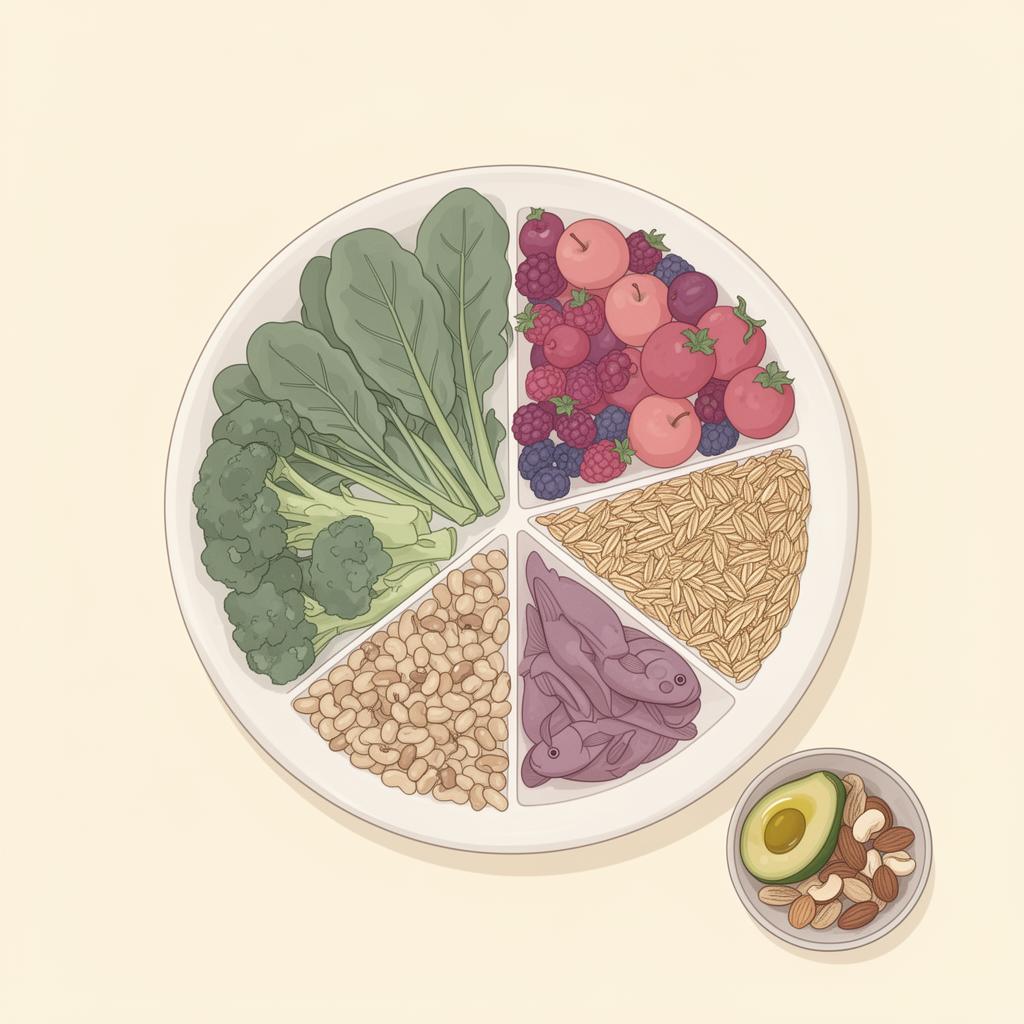
A simple visual: half the plate is vegetables (with at least one cruciferous serving), a quarter is whole grains or legumes, and a quarter is clean protein. Healthy fats — olive oil, avocado, nuts, seeds — round out every meal.
No food list is a moral judgment. These are simply the foods that ask the most of your detoxification systems while giving the least back. Crowd them out gently with the allies above.
Even 1 drink/day modestly raises breast cancer risk by interfering with estrogen metabolism and depleting folate. Less is better; none is best.
Spike insulin and IGF-1, hormones that act as growth signals to all tissues — including breast tissue you'd rather not stimulate.
Soybean, corn, canola, and cottonseed oils are pro-inflammatory omega-6s that throw the body's fat balance out of harmony.
Often carry residues of synthetic hormones, antibiotics, and stored xenoestrogens. Choose organic, pastured, and grass-fed when possible.
Nitrates and heterocyclic amines (formed when meat is grilled or smoked) are classified as probable human carcinogens.
BPA, phthalates, and similar plasticizers leach into food and act as endocrine disruptors. Use glass and ceramic instead.
Start the day with warm lemon water — gentle liver support before food.
Add 1–2 tbsp freshly ground flax to oatmeal, smoothies, or yogurt.
Build the plate: ½ vegetables, ¼ whole grains or legumes, ¼ clean protein.
Drink half your body weight in ounces of filtered water daily.
Stop eating 3 hours before bed — gives the liver overnight to detoxify.
Choose organic for the Dirty Dozen produce; conventional is fine for the Clean Fifteen.
A reflection
"Let food be thy medicine, and medicine be thy food."
— Hippocrates