Chapter 20 · Section V — Healing Forward
Tracking Your Progress
Healing is rarely a single moment. It is a long, quiet accumulation of small choices — and the only way to see it clearly is to gently keep track.
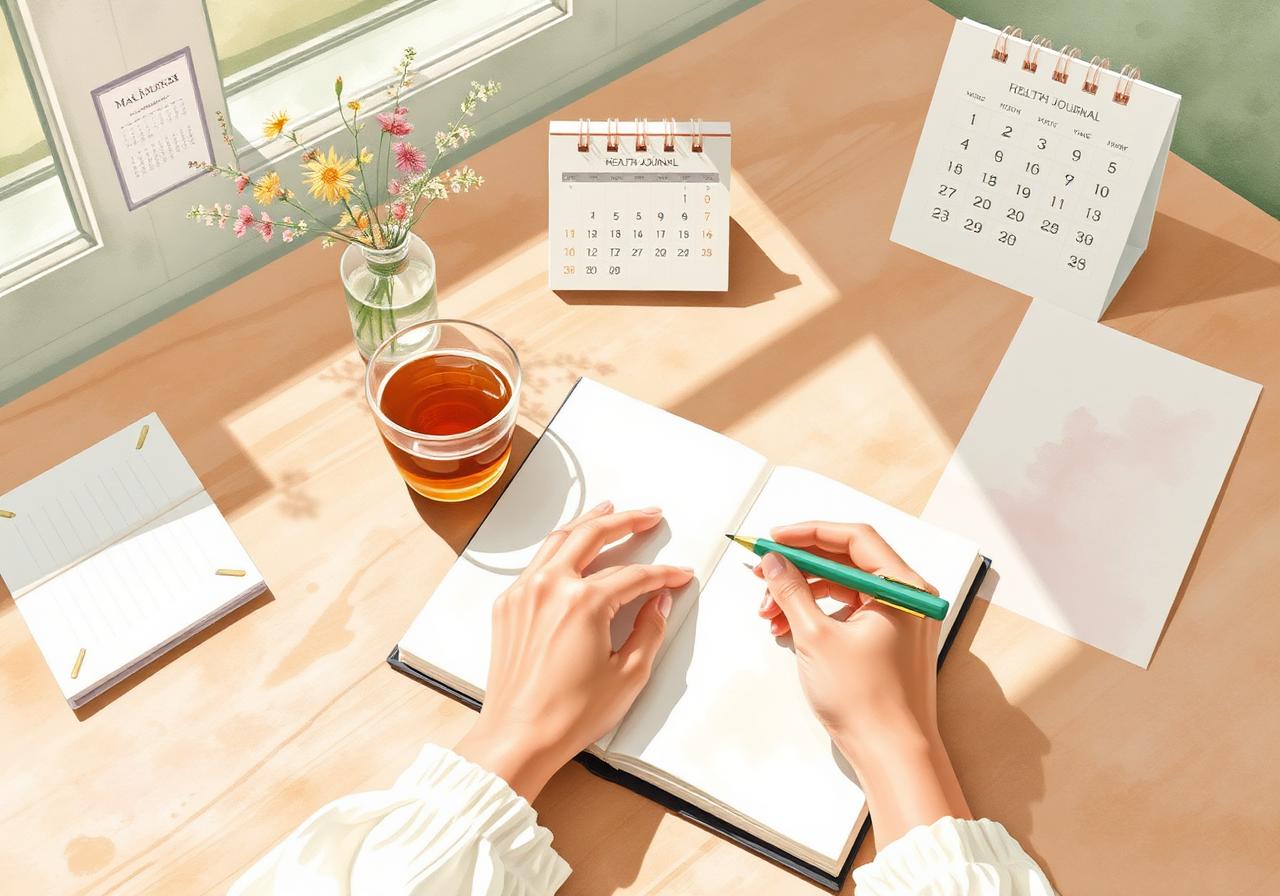
We tend to wait for the dramatic answer — the lab result, the imaging report, the verdict. But the body usually whispers long before it speaks. Tracking is the practice of listening for those whispers, and writing them down so you don't forget them by Tuesday.
This chapter offers a gentle framework: what to notice daily, weekly, seasonally, and yearly. None of it is required. Choose what fits your life. A small practice you actually keep is worth far more than an elaborate one you abandon by week two.
Four principles for tracking without anxiety
Notice, don't grade
Tracking is not a performance review. It is a way to gather quiet evidence of what your body is doing — without judgment, without a pass-fail.
Trends over moments
One night of poor sleep, one tender week, one stressful month — none of these mean anything alone. The signal lives in the pattern over weeks and seasons.
Subjective data is real data
How you feel is not 'soft' information. Energy, mood, libido, digestion and sleep are some of the earliest places the body shows change.
Re-screen on a rhythm, not on fear
Choose your screening cadence in advance with your team. Then keep it. This protects you from both over-imaging in anxious months and avoidance in busy ones.
Daily — the small, gentle markers
Two minutes in a notebook by the bed, or a simple notes-app entry before sleep. You are not collecting data for anyone else. You are building a quiet portrait of your own normal, so deviations become visible.
| Sleep | Hours, and how rested you feel on waking (1–10). |
| Energy | Morning, afternoon, evening. A simple 1–10 is enough. |
| Mood | A word or two. Steady, anxious, tearful, light, low. |
| Digestion | Bowel movement (yes/no, form), bloating, reflux. |
| Movement | What you did, for how long. Walks count. Rest counts. |
| Water | A rough cup count. Most women under-hydrate without noticing. |
Weekly — the rhythm check
Once a week, sit with your notebook for ten minutes. Sunday evening, Friday morning — whenever the seam in your week is. You are looking for the shape of the seven days, not the score.
| Cycle day | If menstruating, where you are in your cycle. Track symptoms against this. |
| Breast self-exam | Once a month, ideally days 7–10 of your cycle. Note tenderness, density, any change. |
| Stress load | What was the week's weight? What carried you through it? |
| Practices held | Dry brushing, rebounding, castor oil, breath work — which of your daily practices stayed alive this week? |
Seasonal & yearly — the longer view
Quarterly check-in (every 3 months)
Sit with your journal for an hour. What is different from three months ago? What is the same? What needs adjusting?
Lab work (every 6–12 months)
With your practitioner: hormone panel, vitamin D, thyroid, inflammatory markers, fasting insulin. Compare against your last set.
Thermography (annually, or as advised)
Same facility, same technician when possible, so the baseline is yours and the comparison is real.
Yearly clinical exam
With the practitioner who knows you best. Bring your journal. Bring your questions written down.
Signs the terrain is shifting
These are the changes most women report after six to twelve months of consistent practice — not because the body has been "fixed," but because it has been listened to and supported.
- Your cycle is steadier — less PMS, less breast tenderness in the second half.
- You sleep more deeply, and wake without the alarm a few mornings a week.
- Digestion is regular. Bowel movements happen daily, easily, without urgency.
- Energy holds through the afternoon without coffee or sugar.
- Skin is clearer; the whites of the eyes are brighter.
- Emotional weather has more range — you cry when sad, you laugh easily, you don't sit numb for weeks.
- Cravings quiet. Hunger and fullness become legible again.
- You think about your body less often, and with less fear when you do.
Signs to bring to your team — without panic
Tracking also means knowing what crosses the threshold from "watch and wait" to "share with a practitioner." The list below is not a diagnosis. It is a list of changes worth a phone call, sooner rather than later.
- A new lump, thickening, or area of firmness that persists past one cycle.
- Skin changes — dimpling, redness, warmth, peau d'orange texture.
- Nipple change — inversion that wasn't there before, discharge (especially bloody or one-sided), persistent rash.
- Persistent pain in one specific spot, unrelated to cycle.
- Swelling in the armpit, collarbone, or arm on one side.
- Unexplained, sustained changes in energy, weight, or appetite.
A reminder
Calling your practitioner about a change is not "overreacting." It is stewardship. The women who do best are not the ones with the fewest symptoms — they are the ones who keep an honest, ongoing conversation with their bodies and with someone trained to listen.
A worksheet for this week
- Choose a notebook, an app, or a simple printed page. Put it where you'll actually see it.
- Pick three daily markers from the list above. Just three, to start.
- Pick a weekly seam — Sunday evening is a good default — and put a recurring 10-minute reminder there.
- Schedule your next quarterly check-in. Put it on the calendar before you close this page.
- If you are due for thermography, labs, or a clinical exam, book those appointments now.
The body keeps a faithful record. Tracking is just learning to read it.