Pineal
Sets the body's master clock through melatonin — and melatonin itself is one of estrogen's quietest regulators.
Chapter 09 · Inner Rhythm
Hormones are not the enemy. They are the body's poetry — chemical messengers that translate your sleep, your meals, your stress, and your seasons into the language of cells. When their rhythm is honored, the breast rests easy. When it is not, the breast is often the first to speak.
Estrogen dominance is rarely about too much estrogen. More often, it is too little progesterone, a tired liver, a stressed adrenal system, and a daily exposure to synthetic hormones we never agreed to. The story is one of balance — and balance can be rebuilt.
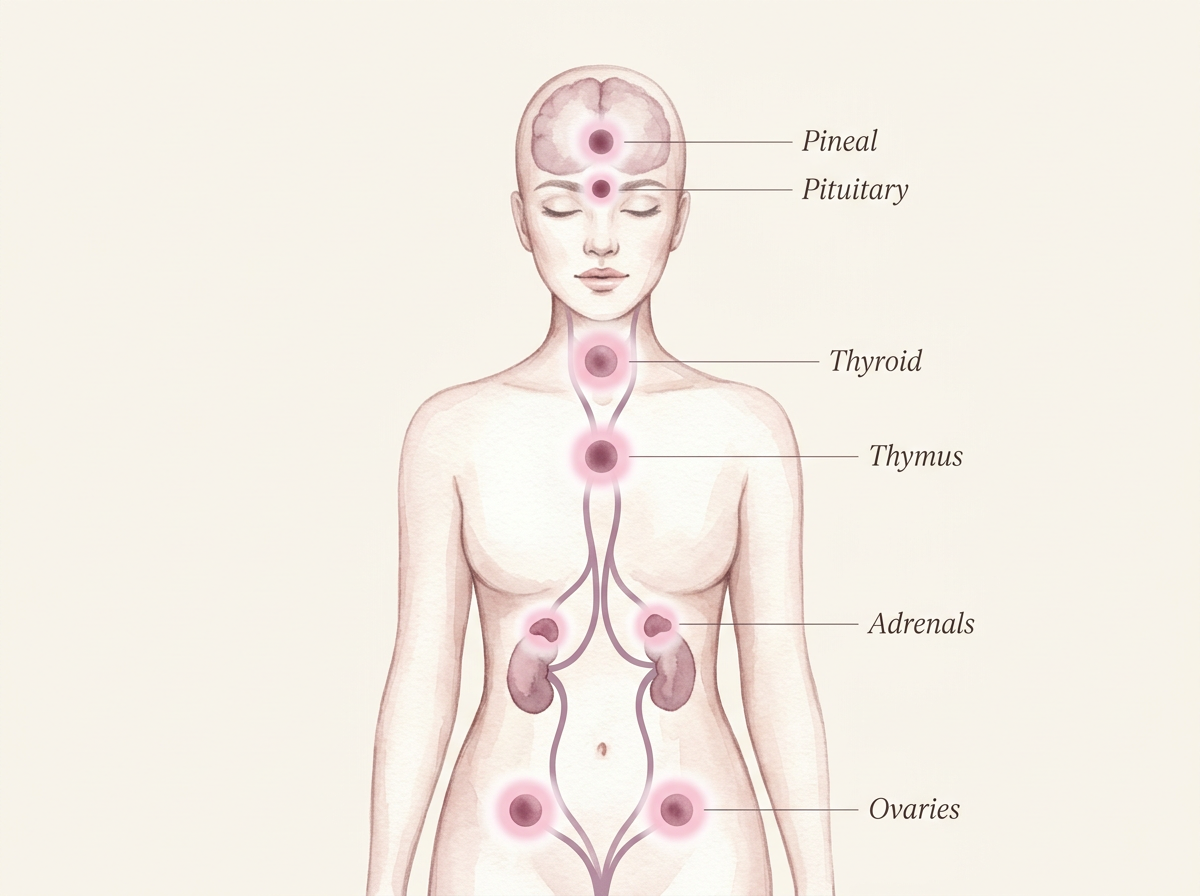
The cast
Sets the body's master clock through melatonin — and melatonin itself is one of estrogen's quietest regulators.
The conductor. Signals the ovaries, thyroid, and adrenals when to release their hormones.
Governs metabolism. A sluggish thyroid slows liver clearance — and estrogen begins to pool.
Trains the immune system to recognize what is self and what is foreign. Quietly atrophies under chronic stress.
Make cortisol and DHEA. When stress is constant, they steal progesterone's building blocks — tipping the estrogen balance.
Release estrogen and progesterone in monthly rhythm. Their conversation, not their levels alone, is what matters.
A quiet truth
The breast is an estrogen-listening organ. Whatever the body says about estrogen, the breast hears first — and remembers longest.
Listen for
You may not have all of these. Two or three, recurring monthly, are enough to begin paying attention.
The liver decides
Once estrogen has done its work, the liver breaks it down through one of three doors. Which door it walks through changes everything.
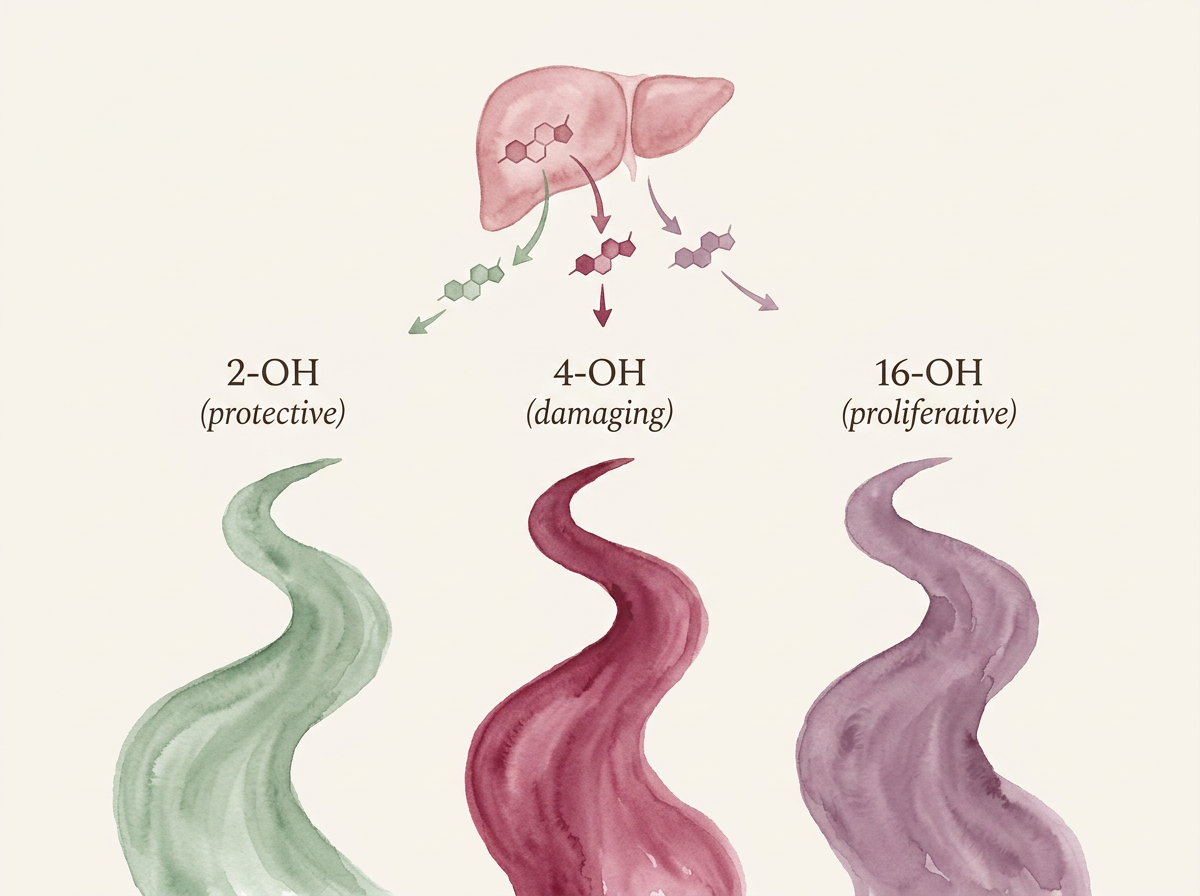
2-OH
The cleanest exit. Supported by cruciferous vegetables (broccoli, cauliflower, kale), DIM, and indole-3-carbinol.
4-OH
Forms reactive metabolites that can damage DNA. Driven up by alcohol, xenoestrogens, and a sluggish liver.
16-OH
Encourages tissue growth. Elevated by chronic stress, obesity, and high-glycemic eating patterns.
Daily devotion
01
Broccoli, cabbage, Brussels sprouts, arugula, kale — they fuel the protective 2-OH pathway.
02
Beets, dandelion greens, milk thistle, turmeric, and warm lemon water all support phase I and II detoxification.
03
Estrogen leaves the body through stool. Constipation lets it reabsorb. Fiber, water, and movement keep it moving out.
04
Sleep before 11pm, slow mornings, magnesium at night. Cortisol and progesterone share the same precursor.
05
Swap plastic for glass, conventional dairy for organic, fragrance for essential oils, BPA-lined cans for fresh.
06
Track your period. The luteal phase is when symptoms speak loudest — listen there first.
Reflection
This week's practice
01
Add one cup of cooked cruciferous vegetables to your daily meals.
02
Begin tracking your cycle — note mood, sleep, and breast tenderness.
03
Replace one plastic food container in your kitchen with glass.