Cervical nodes
Along the sides of the neck. Drain the head, scalp, and upper face — often tender during illness or jaw tension.
Chapter 08 · Inner Ecology
If the bloodstream is the body's river of nourishment, the lymphatic system is its river of cleansing. It carries away what no longer serves — and the breast sits at one of its busiest crossroads.
Most women have never been taught about their lymphatic system, yet it moves twice the volume of blood through the body each day. It has no heart of its own — it relies on your breath, your movement, and your touch to keep flowing.
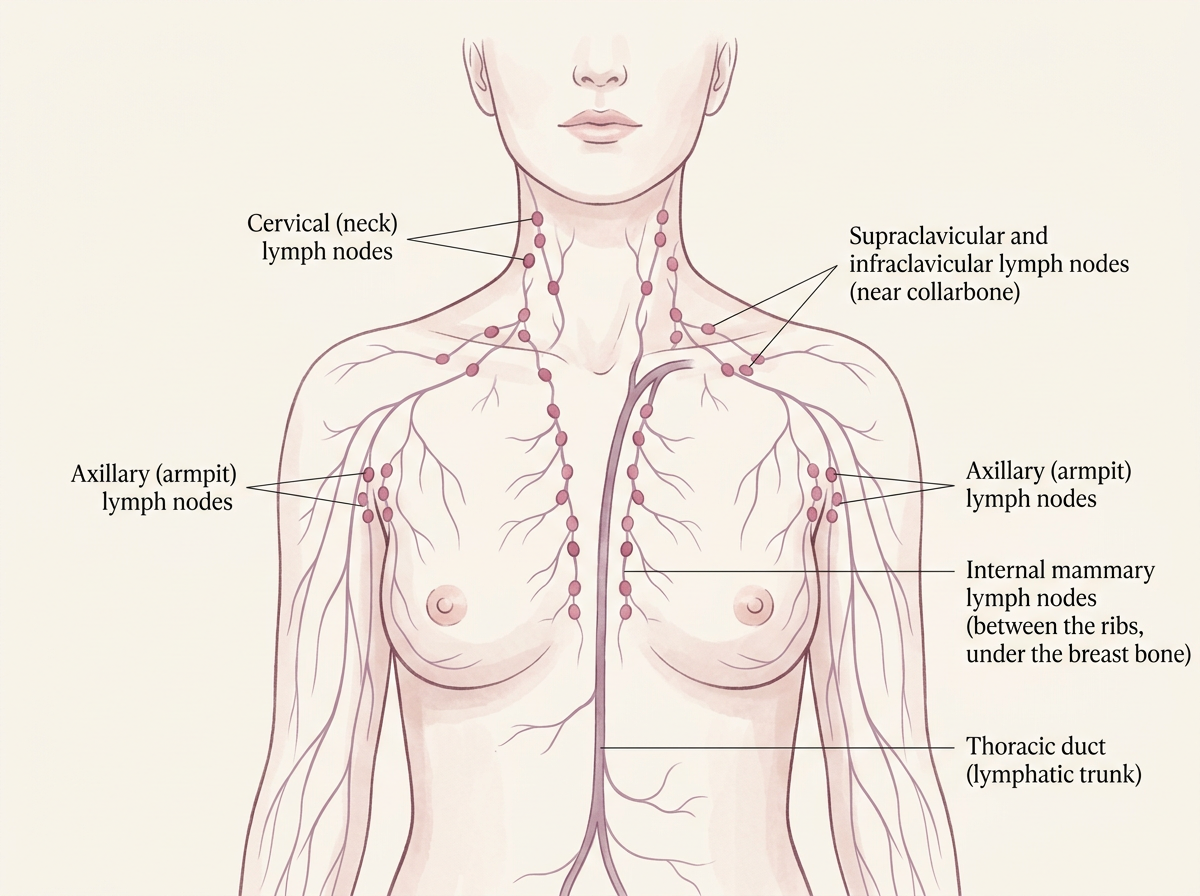
Anatomy
Five clusters of lymph nodes do most of the work for the chest and breast. Knowing them helps you understand why drainage matters.
Along the sides of the neck. Drain the head, scalp, and upper face — often tender during illness or jaw tension.
Just above the collarbone. A meeting point where lymph from the chest and arms returns to the bloodstream.
Inside the underarm. The primary drainage site for the breast — and the first stop for most breast tissue.
Behind the sternum. Drains the deeper, inner portion of the breast — invisible to most imaging.
The body's largest lymphatic vessel. Empties cleansed lymph back into the bloodstream near the left collarbone.
A quiet truth
Lymph does not flow on its own. It flows because you breathe, you move, you stretch, you laugh, you walk, you touch yourself with care.
Listen for
The body whispers before it shouts. These are common signals that your lymphatic flow needs support.
Daily devotion
Choose one to begin. Layer the others in over the coming weeks.
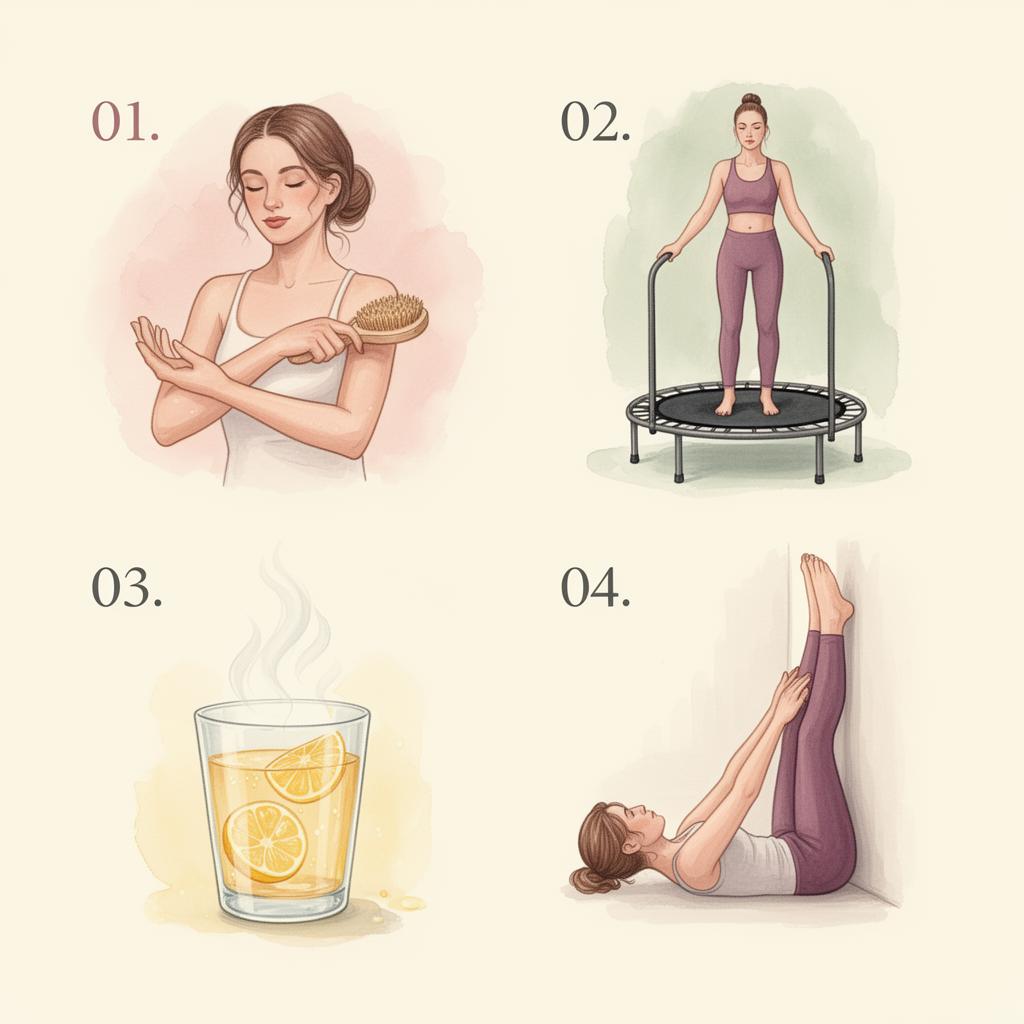
01
Seven to ten minutes a day before your shower. Use a natural-bristle brush in long, light strokes — always toward the heart and the underarms.
02
Five to ten minutes a day on a mini-trampoline. The vertical bounce gently opens and closes lymph valves like a pump.
03
First thing in the morning. Hydrates, alkalizes, and signals the digestive and lymphatic systems to begin the day's flow.
04
Ten minutes in the evening. Reverses gravity and lets pooled lymph drain back toward the chest.
Habits that help
Reflection
This week's practice
01
Order a natural-bristle dry brush and place it next to your shower.
02
Set a phone reminder every two hours to take ten deep belly breaths.
03
Try ten minutes of legs-up-the-wall before bed for three nights this week.